
Most people who work in commercial buildings have never heard the term “riser management.” They interact with the results of it every day the internet connection that works reliably, the phone system that doesn’t drop calls, the Wi-Fi that reaches every corner of the floor without knowing what keeps those systems functional behind the walls.
Riser management is the discipline responsible for all of that. And in buildings where it’s absent or neglected, the problems that result are expensive, time-consuming, and increasingly difficult to fix the longer they go unaddressed.
What Is a Riser in a Commercial Building?
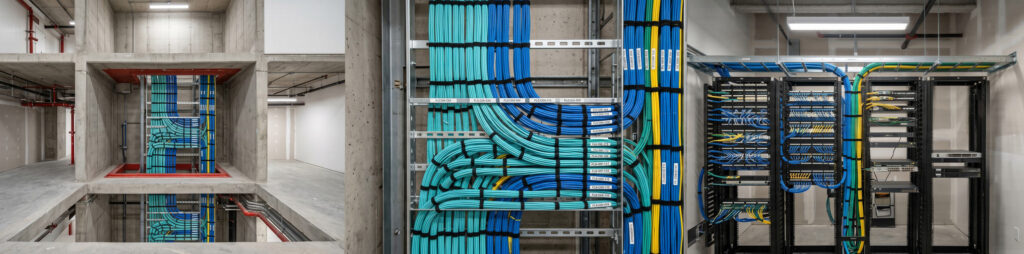
In commercial real estate, a riser refers to the vertical pathway typically a dedicated shaft or conduit running between floors through which telecommunications cables, fiber, copper, and other low-voltage infrastructure travel throughout the building.
The riser system connects a building’s main point of network entry, typically at the main distribution frame (MDF) in a ground-floor or basement telecom room, to intermediate distribution frames (IDFs) on individual floors. From those IDF rooms, horizontal cabling runs to workspaces, offices, and common areas across each floor.
Think of it as the building’s nervous system. Everything that carries data, voice, and connectivity between floors runs through it and everything that happens in individual offices depends on it functioning correctly.
What Is Riser Management?
Riser management is the ongoing process of organizing, documenting, maintaining, and overseeing the infrastructure that runs through a building’s riser pathways and telecom rooms.
In practice, this means knowing what cables are installed and where they go, ensuring telecom rooms are organized and accessible, coordinating the activities of multiple internet and telecom providers sharing the same infrastructure, maintaining accurate documentation as systems change, and planning for future capacity needs before the existing pathways become overcrowded.
It sounds straightforward. In most commercial buildings, it isn’t because riser infrastructure tends to accumulate complexity over time without anyone taking explicit ownership of managing it.
How Riser Infrastructure Gets Complicated
When a building is first constructed or fully renovated, the riser infrastructure is typically clean and organized. Cables are routed properly, telecom rooms are structured, and documentation reflects reality.
That state rarely lasts.
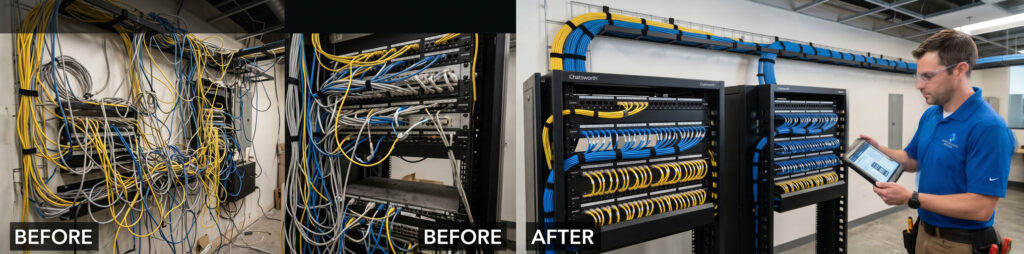
As tenants move in and out, internet providers install new circuits, telecommunications vendors add equipment, IT contractors run additional cabling, and building management makes infrastructure changes all of this activity happens in shared spaces without centralized coordination. Cables get added without documentation. Old cabling from previous tenants stays in place because nobody is certain what’s still active. Telecom rooms that started organized become crowded and difficult to navigate.
According to BICSI, the professional association for building information infrastructure, undocumented and poorly managed building cabling is among the leading causes of extended troubleshooting time and increased maintenance costs in commercial facilities.
Over several years, a building’s riser environment can become genuinely difficult to manage not because anything catastrophically failed, but because incremental changes accumulated without structure.
Why Riser Management Matters for Building Owners and Property Managers
Troubleshooting Becomes Expensive Without Documentation
When a connectivity issue affects a tenant, the first question is: what’s actually installed, and where does it go? In a well-managed riser environment, that question has a clear answer. In an undocumented one, it requires physically tracing cables through crowded pathways, testing circuits that may or may not be labeled, and coordinating between multiple providers who each installed their own equipment without reference to what came before.
That process takes time and time in a commercial building context means extended tenant disruption and, often, service calls that cost more than they should because the diagnostics take longer than the actual fix.
Provider Conflicts Create Service Disruptions
Most commercial buildings host multiple internet service providers, telephone carriers, and specialized telecom vendors all sharing the same riser pathways and telecom rooms. Without coordination, providers install equipment wherever is convenient, circuits go untracked, and the demarcation between one provider’s infrastructure and another’s becomes unclear.
This creates a specific category of problem that’s surprisingly common: when a connectivity issue occurs, providers point at each other’s equipment as the source, while the building owner tries to determine whose responsibility the problem actually is. Clear riser documentation and circuit management eliminates most of these disputes before they become extended outages.
Overcrowded Pathways Limit Future Flexibility
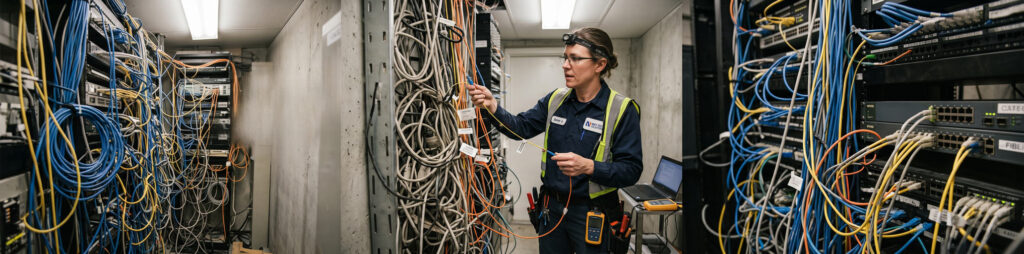
Riser pathways have finite capacity. As cabling accumulates including abandoned cabling from previous tenants and defunct services available pathway space decreases. When a new tenant needs connectivity, or when a provider needs to install additional circuits, overcrowded pathways create installation challenges that delay service and increase cost.
Proactive capacity management prevents the situation where a straightforward installation becomes complicated because there’s simply no room left to route new cables correctly.
Telecom Room Condition Affects Building Operations
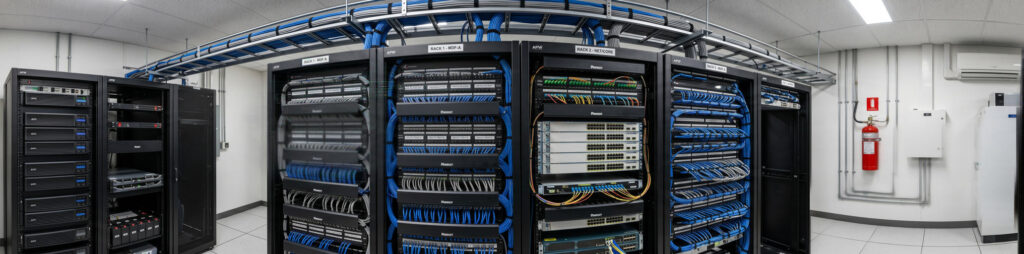
MDF and IDF rooms that are disorganized, overcrowded, or poorly maintained create operational risk. Equipment runs warmer in poorly ventilated spaces. Patch panels that aren’t clearly labeled require guesswork when changes need to be made. Rooms that have become storage overflow spaces create safety and access issues for the technicians who need to work in them.
A telecom room that’s difficult to work in is also a telecom room where mistakes happen wrong cables disconnected, equipment damaged during installation, configurations changed without documentation.
Compliance and Insurance Considerations
Many commercial leases and building insurance policies include requirements around low-voltage infrastructure maintenance and documentation. Abandoned cabling in particular presents fire code concerns in some jurisdictions the National Electrical Code requires removal of abandoned cables unless they’re properly identified and marked for future use.
Building owners who maintain documented, organized riser infrastructure are better positioned for inspections, tenant audits, and insurance reviews than those operating with infrastructure nobody has formally inventoried.
The Difference Between Reactive and Proactive Riser Management
Most buildings manage riser infrastructure reactively addressing problems when tenants complain, coordinating with providers when issues arise, and making changes when situations demand them. This approach keeps things functional most of the time, but it allows the infrastructure to degrade gradually between interventions.
Proactive riser management means conducting regular infrastructure audits, maintaining current documentation as changes occur, reviewing pathway capacity before it becomes a constraint, and coordinating provider activities before they create conflicts rather than after.
The practical difference is significant. Buildings with proactive riser management resolve connectivity issues faster, accommodate new tenants more efficiently, experience fewer provider conflicts, and have infrastructure that remains maintainable over time rather than becoming progressively harder to work with.
What Good Riser Management Looks Like in Practice
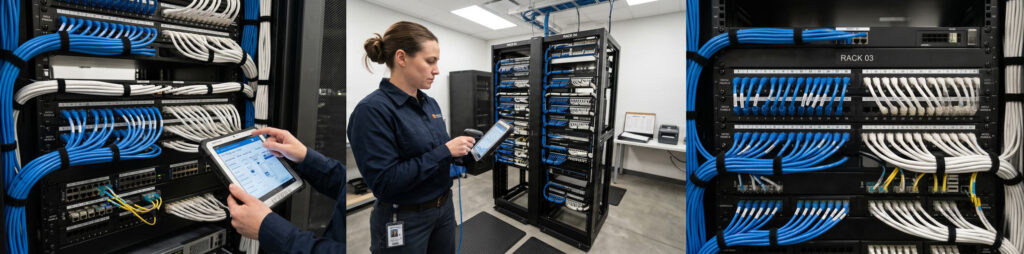
A well-managed riser environment has a few consistent characteristics regardless of building size.
Every cable is labeled and documented not just at installation, but updated when changes are made. Telecom rooms are organized, accessible, and maintained as infrastructure spaces rather than overflow storage. Circuit documentation tracks which provider owns which connection and where it terminates. Pathway capacity is monitored so overcrowding is addressed before it becomes a constraint. And when providers or contractors need access to the riser environment, there’s a coordination process that ensures their work is documented and doesn’t create conflicts with existing infrastructure.
This doesn’t happen automatically. It requires someone taking explicit ownership of the riser environment either building management staff with the expertise to maintain it, or a specialized provider engaged specifically for that purpose.
Riser Management for Commercial Buildings in Glendale
Glendale’s commercial real estate market includes a mix of older buildings with legacy infrastructure that was never formally managed and newer developments where riser systems were installed correctly but have accumulated complexity as tenants have come and gone.
In both cases, the pattern is similar: riser infrastructure that worked adequately when it was last addressed becomes progressively harder to manage without formal oversight.
At Techbleed, we work with building owners and property managers in Glendale to assess, organize, document, and maintain commercial riser infrastructure bringing structure to environments that have accumulated complexity over time and establishing ongoing management that prevents that complexity from returning.
Frequently Asked Questions
What is a riser in a commercial building?
A riser is the vertical pathway — typically a dedicated shaft or conduit — through which telecommunications cables and low-voltage infrastructure travel between floors in a commercial building. It connects the building’s main telecom room to floor-level distribution points and ultimately to individual tenant spaces.
What does riser management involve?
Riser management involves organizing and maintaining the cables, equipment, and infrastructure in a building’s riser pathways and telecom rooms including documentation, provider coordination, capacity planning, labeling, and ongoing maintenance to keep the infrastructure organized and functional over time.
Why do commercial buildings need riser management?
Without active management, riser infrastructure accumulates undocumented cabling, overcrowded pathways, and disorganized telecom rooms as tenants and providers make changes over time. This makes troubleshooting slower, increases maintenance costs, creates provider conflicts, and limits the building’s ability to accommodate new tenants efficiently.
What are MDF and IDF rooms?
The main distribution frame (MDF) is the primary telecom room where the building’s connectivity enters from outside providers and is distributed throughout the building. Intermediate distribution frames (IDFs) are floor-level telecom rooms that receive infrastructure from the MDF and distribute it across individual floors. Both require active management to remain organized and functional.
How often should riser infrastructure be audited?
Most commercial buildings benefit from a formal riser audit annually, with documentation updates made continuously as changes occur. Buildings with high tenant turnover or multiple active providers may benefit from more frequent reviews.
What happens if abandoned cabling isn't removed?
Abandoned cabling reduces available pathway capacity, creates fire code concerns under the National Electrical Code, and makes the riser environment progressively harder to manage. Most jurisdictions require abandoned cables to be removed or properly identified and marked for future use.